Am I overthinking or is it my intuition? Guidance from an OCD Therapist in Boston part 2

By: Jen Lescher, LCSW/LICSW
In my last blog, I talked about how hard it can be to trust yourself and connect with your inner wisdom—your intuition—when you’re living with OCD or anxiety. When you’re in an anxiety or OCD spike, there’s usually a lot of overthinking and searching for certainty. And the thing about overthinking (or rumination) is that it pulls you away from trust. Trust is simple, gentle, and easeful. I go more into this in my previous post, which you can read here.

Why the Search for Certainty Fuels OCD and Rumination
When we chase certainty, we run into a problem: we can’t actually get it. There’s no true certainty in this world. Theoretically, any obsession, worry, or fear could happen—even the ones that feel far-fetched. That’s why the mind never feels satisfied when it’s looking for a guarantee. You might feel a moment of relief after landing on an “answer,” but eventually another what-if appears and pulls you right back into the rumination cycle.
This is overthinking—not intuition.
As I shared in my last blog, intuition is your inner knowing your natural wisdom and guidance system. We all have it, and we use it every day when anxiety or OCD isn’t activated. But when fear gets triggered, accessing that inner knowing becomes harder.
How You Already Practice Self-Trust Every Day
So how do you tell the difference between intuition and anxiety or OCD?
The honest answer is: you won’t know for sure. Remember—there’s no certainty. If you find yourself trying to prove with certainty whether something is an intuitive nudge or an OCD/anxiety thought, that’s your sign to gently step out of that search. When you’re anxiously trying to find certainty, that is your cue that you are ruminating.
Intuition—and self-trust—feel simple and soft. They’re not fear-based. They’re not frantic. They’re not ruminative.
And you already know how to trust yourself. You do it all the time when OCD or anxiety isn’t activated:
- You know what foods you enjoy.
- You know when you have a fever.
- You know what shower temperature you like.
- There’s no debate or mental gymnastics—just a quiet sense of “I know.”
This applies to bigger things, too. When you’re regulated, you know what you’re passionate about. You trust yourself to comfort a friend in pain. You make plans for your life. Of course, OCD, anxiety, or neurodivergence may make some of these examples more complicated, and everyone’s experience is different—but the point is: you do have an inner guidance system, and you use it regularly. And it feels very different from overthinking.
The Link Between Rumination and Loss of Self-Trust
So here’s the key:
When you’re ruminating, you’re not trusting—and you’re not in your intuition.
The path back to trust isn’t about figuring out with certainty whether you’re ruminating or being intuitive. And it’s definitely not through hunting for more certainty. The way back is gently remembering to trust yourself and moving forward with your life—the same way you do in all the moments when fear isn’t steering the wheel.

I know this sounds simple, but it’s not easy. It’s very hard work. It requires patience, practice, and persistence. Why? Because you’re scared, and fear tells you that if you ruminate, you’ll figure something out—and if you figure it out, then you won’t feel anxious or you’ll stop something bad from happening. But think about it: when have you ever figured something out when you were in that anxious state? It doesn’t happen. It only creates more pain. So we have to choose another way—the way of trust and non-rumination—even though your brain insists that if you stop ruminating, your worst fear will come true or you’ll feel anxious forever.
But let me remind you: rumination doesn’t lead to less anxiety or to actually figuring things out. So we take a leap of faith and practice disengaging from OCD by remembering how to trust ourselves.
How ICBT Supports Trust and Common Sense
So how do we do this?
In my last post, I used the example of someone with checking compulsions learning to trust their senses while locking a door—an ICBT skill I teach in therapy. This time, I want to use a more abstract example: trusting your common sense and your judgment.
Relationship OCD and Self-Trust
Let’s say Sara has been with her boyfriend for several years. It’s mostly a secure relationship—both partners communicate directly, feel emotionally close, enjoy each other’s company, and are committed to each other. But, like any relationship, it isn’t perfect, and sometimes Sara’s boyfriend annoys her.
When she gets annoyed, she becomes anxious and starts wondering whether she really loves him, how she can know for sure that she loves him, and how she can know this is the right relationship. She tries to answer these questions and search for certainty through overthinking and rumination. Now she’s wondering whether these thoughts are her intuition and if they mean something significant.
In ICBT for OCD, we would guide Sara back to trusting herself. This might look like reflecting on evidence:
- Does the relationship show signs of high conflict? (Not just normal conflict—because all relationships have that.)
- Does she enjoy being with her boyfriend most of the time?
- Does she feel safe with him?
These questions can be hard to answer if Sara starts overanalyzing. But if she reflects briefly, trusts what comes up first, and then comes back to the present moment then she’s practicing self-trust—not rumination.
Another question I’d ask is, “Do you want to be in this relationship right now?” I’d encourage her to trust her first answer and stay out of the trap of trying to figure out whether this is the right relationship or predicting what the future will look like. The goal is to return to the present moment and trust her immediate, grounded sense—her intuition.
Returning to the Present Moment
Notice that staying in the present moment is a key part of self-trust. Rumination tries to pull you into the past or the future. When that happens, we drift out of our bodies and into our minds, and we start to dissociate. When you notice this, gently come back to your senses—what you can see, hear, feel—what is happening right here, right now.
Trust the version of you who already made a choice, and resist the urge to keep re-analyzing it. You will have to practice this again and again, and yes, it’s hard. But over time, your brain learns a new pattern. You’re teaching it that trust—not rumination—is the safer path.

Therapy for OCD in Boston & California
Access to thoughtful, specialized OCD therapy can make a meaningful difference in how you relate to intrusive thoughts, compulsions, and uncertainty. Whether you’re in Boston or California, OCD counseling offers a supportive space to build skills, strengthen resilience, and feel more grounded in your daily life.
OCD therapy at my practice often includes evidence-based approaches like ERP, CBT, and mindfulness-based strategies. These tools can help you develop new ways of responding to thoughts, reduce time spent in compulsive behaviors, and increase your sense of confidence and control.
If you’re exploring online OCD therapy, finding a therapist who understands the nuances of OCD, including cultural, relational, and life-stage factors, can be an empowering next step.
Find Support with OCD Therapy in Boston, MA or Online from California
You already have the inner guidance to navigate your life; OCD therapy can help you strengthen that trust and build practical skills to respond to thoughts with clarity and confidence. Whether you’re in Boston or connecting online from California, Jen Lescher LCSW offers personalized OCD counseling designed to support you in showing up fully for your life.
- Take the next step today: schedule a consultation.
- Read more blogs here for insights into OCD counseling.
- Explore how therapy can help you move forward with trust, presence, and a sense of ease in everyday moments.
Additional Resources to Support Your Journey
In addition to personalized OCD therapy, I provide resources to help you bring what you’re learning in sessions into everyday life. The Common OCD Themes page explores the intrusive thoughts and behaviors many people experience. The OCD and Social Life page focuses on how OCD can affect friendships, dating, and relationships, sharing practical strategies to strengthen connections and build confidence while managing symptoms.
About the Author: OCD Therapist Jen
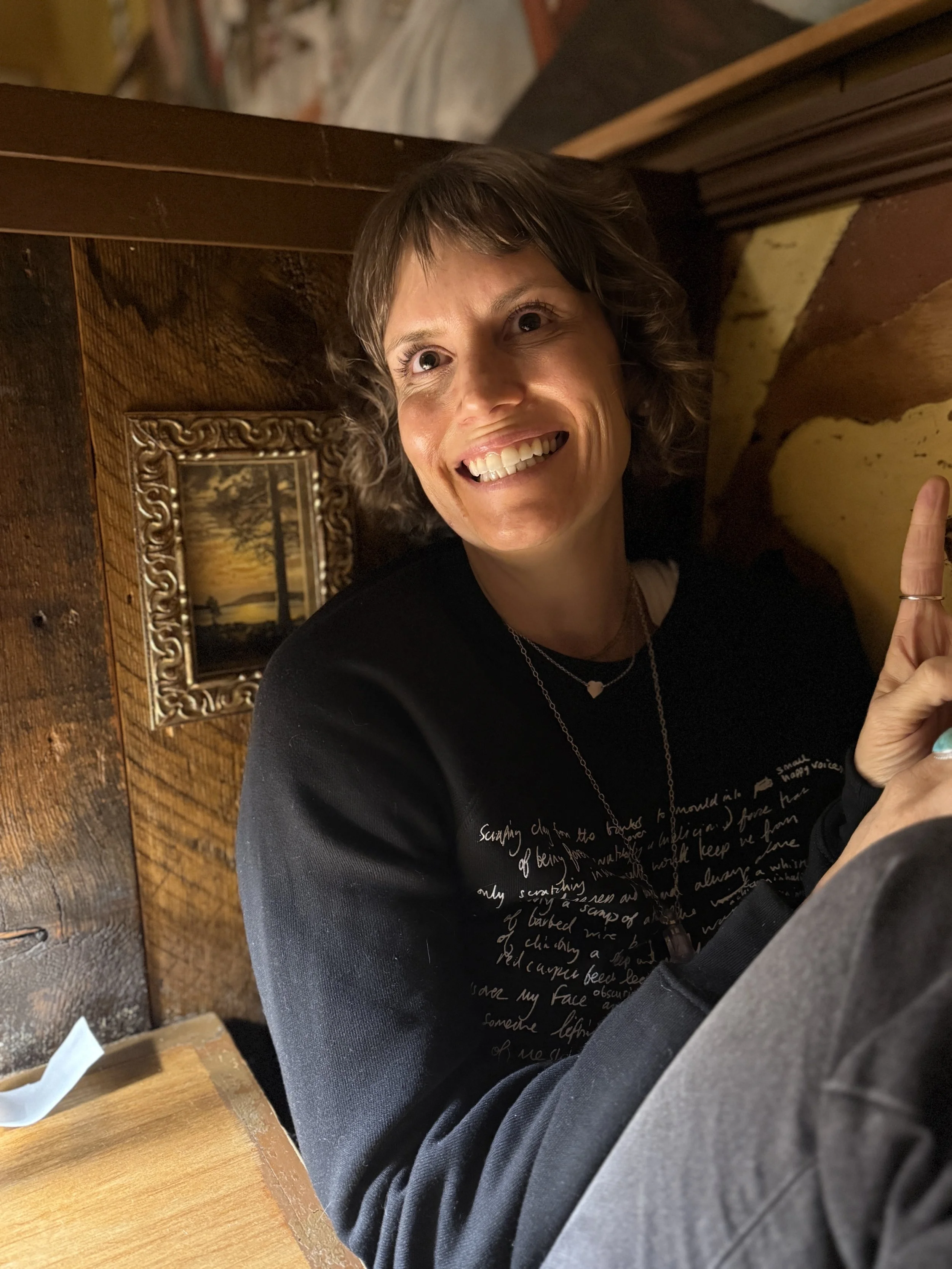
I’m a therapist, coffee lover (seriously, it’s my favorite daily ritual), and someone who values small moments of presence—whether through mindfulness, photography, or a quiet walk with my camera. Photography helps me stay grounded and curious, a mindset I bring into my work with clients. I’ve been drawn to spirituality and healing since my teens, exploring everything from meditation to energy practices. But I also love blasting music in the car or diving into a true crime podcast. Healing, in my view, can include stillness and movement, reflection and laughter. Therapy should make room for all of that.
Since 2007, I’ve worked across a variety of mental health settings, which taught me that healing isn’t one-size-fits-all. It’s personal, evolving, sometimes messy—but always possible.
Training & Background:
- Inference-Based CBT (ICBT) for OCD – The OCD Training School & The Cognitive Behavioral Institute
- Certified in Exposure and Response Prevention (ERP) – The Cognitive Behavioral Institute
- Gottman Method Couples Therapy – Level 1
- Master’s in Social Work – Portland State University, 2012