Why Mindfulness for OCD Isn't About "Clearing Your Mind" in OCD Recovery
Mindfulness is a big part of my life. I incorporate it into my therapy practice and into my daily life, both as someone who is spiritually inclined and as someone in recovery from OCD. This is what I love about mindfulness-it's helpful for everyone, whether you're spiritual or not.

In fact, I find that if my mindfulness practice starts slipping, my OCD begins to creep back in. That's right, OCD recovery doesn't mean you stop getting triggered or stop having OCD thoughts. Instead, OCD recovery means you respond differently to your thoughts, which is essentially the definition of a mindfulness practice. Mindfulness isn't about working toward not having thoughts; it's about responding to your thoughts differently.
Mindfulness Isn't About Stopping Thoughts
This is because it's unrealistic to think you'll ever reach a place where you stop having thoughts altogether. The nature of the mind is that it thinks. It wants to protect you through problem-solving and analysis. That's not going to stop. Just as your heart beats, your lungs breathe, and your stomach digests, your mind thinks.
In mindfulness, we aren't trying to fight against the mind's nature and stop it from thinking-that would be impossible. If I were to tell you to clear your mind and stop thinking or else something bad would happen, could you do it? Nope. Even if there were some huge consequences, you wouldn't be able to stop your thoughts. It's out of your control, just like many other bodily functions are out of your control.
So instead, in mindfulness, we allow our thoughts to be present. We don't resist. We don't judge. We don't try to stop them or push them away. And emotions can surface when we allow our thoughts to be with us in this way. We may feel irritation (especially if we are new to mindfulness), sadness, anxiety, fear, but also joy, peace, and other emotions. And we do the same thing with those emotions-we allow them, we don't judge them as good or bad, and we don't try to stop them. Just like thoughts, you can't simply stop emotions.
How Mindfulness Is Used in OCD Therapy
So what does this actually look like in OCD therapy?
As a therapist who specializes in OCD, I often tell my clients that they don't have to sit down for formal meditation to practice mindfulness. In fact, for many of my clients, I don't think a formal practice like that is helpful until their OCD and anxiety symptoms are better managed. Instead, I begin teaching mindfulness in session so they can start using it on their own when they experience an OCD spike.
My clients often come to sessions feeling triggered by their OCD thoughts, and I walk them through allowing the thought to be there without doing anything about it and allowing themselves to feel whatever pain may surface.
Let's use a hypothetical example to illustrate what this can look like.
Let's say Amara is struggling with relationship OCD, and she comes to session distressed by the intrusive thought that she might not be in the "right" relationship. Her mind is racing, trying to figure it out, but she can't find an answer no matter how much she thinks about it. She's feeling anxious because she can't figure it out.
If I were to incorporate mindfulness into helping Amara navigate this OCD flare, I wouldn't help her determine whether the relationship is right. That thinking pattern is keeping her stuck in fight-or-flight mode, so she can't think clearly, she isn't connected to herself, and quite simply, this kind of thinking is getting her nowhere-and it will continue to get her nowhere.
Instead, we have to exit the debate by taking a step back from the thought.
I might say something like:
"Okay, here is this thought. We see it, we hear it, and we can even feel it. Allow it to be here without analyzing what it means about your relationship, your future, or you as a person. It's a thought, and it's making you feel scared. Let's feel the fear in the body, and let's not analyze what that feeling means or how long it's going to last. Allow it all to be here without assigning meaning to any of it or trying to make it go away."

Learning to Step Out of the OCD Thought Spiral
When we practice this, our attention begins to shift away from the thought. Maybe that shift away from it only lasts a second until you feel pulled back into the thought spiral, and that's okay. It doesn't mean you're doing something wrong, and it doesn't mean your OCD is worse than anyone else's. These are common things I hear my clients say when their intrusive thoughts keep coming back.
And of course they come back-that's the nature of an obsession. Obsessions return. In mindfulness, we don't judge ourselves or the thought for being persistent. And with OCD, we expect the thoughts to come back.
Don't judge them. Don't analyze them. Don't make them an emergency.
Instead, just name them as thoughts, allow them to be present, feel your feelings, and return to whatever you're doing in the moment.
More on mindfulness and OCD in my next post. Stay tuned.
OCD Therapy in Boston, MA & San Diego, CA
Mindfulness can be a powerful tool for managing OCD, but learning how to apply it when you're in the middle of an OCD spiral is often much harder than it sounds. Many people find that having support helps them recognize compulsions more quickly, disengage from rumination, and build confidence in their ability to tolerate uncertainty.
Jen Lescher, LCSW, offers OCD therapy in Boston, MA and online OCD counseling throughout California, including San Diego. Drawing from evidence-based approaches such as Exposure and Response Prevention (ERP) and Inference-Based CBT (ICBT).

Take the Next Step Toward OCD Recovery
If you're tired of feeling stuck in intrusive thoughts, rumination, or compulsive behaviors, therapy can help. Jen Lescher, LCSW, works with adults navigating OCD, anxiety, and related challenges, helping them develop practical tools for managing uncertainty and responding differently to fear.
If you're curious about working together, reach out to schedule a consultation.
Learn more about OCD therapy in Boston, MA or online throughout California.
Together, we can explore what support might look like and begin building the skills needed to navigate OCD with greater freedom and self-trust.
Additional Resources for OCD, Anxiety & Mindfulness
Looking to learn more? In addition to providing OCD counseling, Jen offers educational resources to help you better understand OCD and the recovery process. Explore Common OCD Themes and OCD social life for discussions on Relationship OCD (ROCD), Moral OCD, Harm OCD, rumination, intrusive thoughts, ERP therapy, and ICBT for OCD. These resources are designed to help you make sense of what you're experiencing and reinforce the skills you're learning both in and outside of therapy.
About Jen Lescher
Hi, I'm Jen.
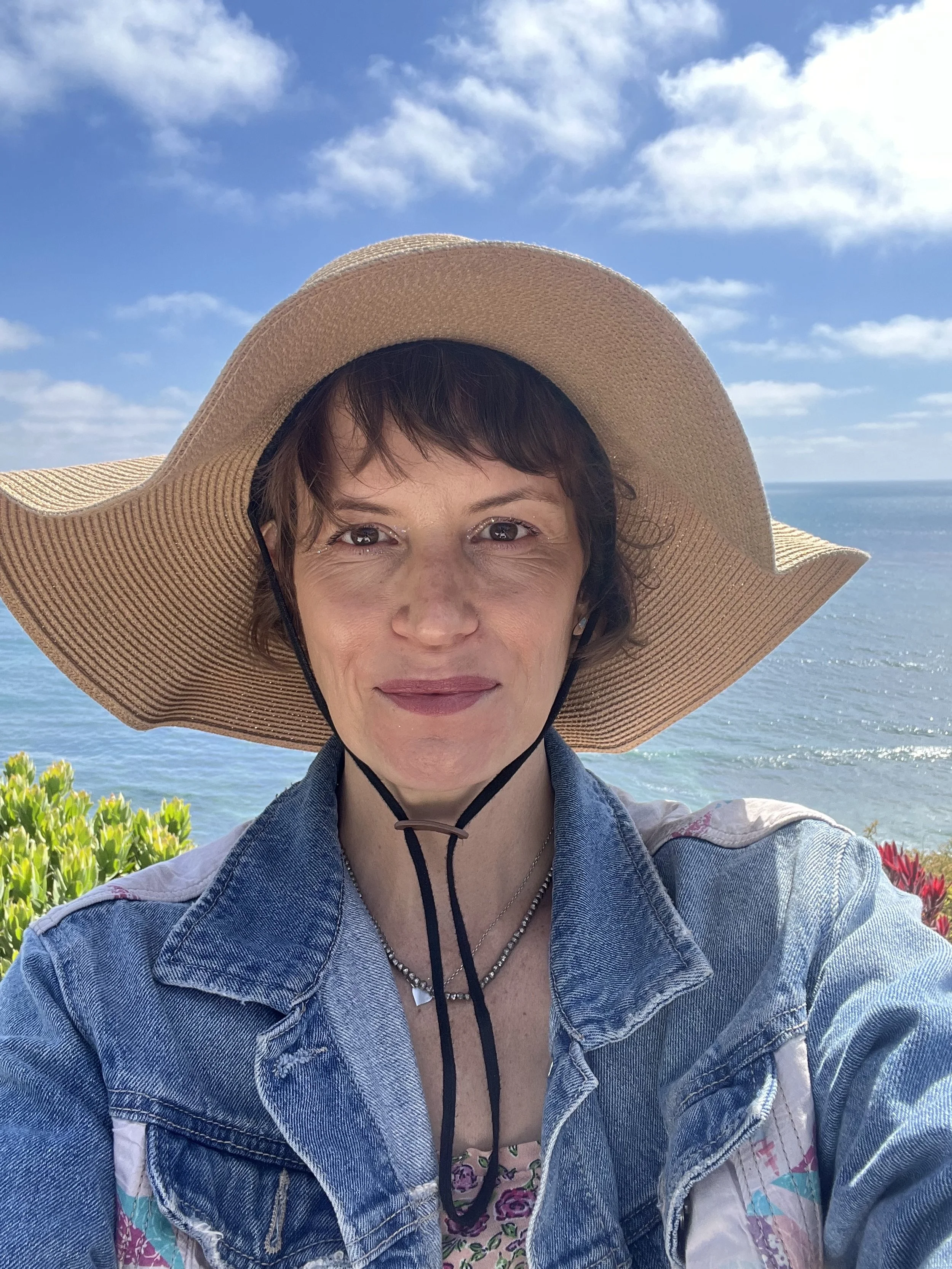
I'm a therapist, coffee enthusiast (honestly, it's my favorite part of the day), and a big believer in finding small moments of presence-whether that's through mindfulness, photography, or a quiet walk with my camera in hand. Photography helps me stay grounded and see the world with a little more curiosity, and that same mindset shows up in my work with clients. I've been drawn to spirituality and healing work since I was a teenager, exploring everything from meditation to energy practices. But I'm also someone who loves blasting music in the car and getting lost in a true crime podcast. I think healing can include both stillness and movement, reflection and laughter. Therapy should have room for all of that. Since 2007, I've worked in a range of mental health settings, which taught me that healing isn't one-size-fits-all. It's personal, evolving, and sometimes messy-but always possible.
Training & Background:
Inference-Based CBT (ICBT) for OCD - The OCD Training School & The Cognitive Behavioral Institute
Certified in Exposure and Response Prevention (ERP) - The Cognitive Behavioral Institute
Gottman Method Couples Therapy - Level 1
Master's in Social Work - Portland State University, 2012
