Inference-Based CBT (ICBT) for OCD: More Things You Should Know
In my last couple of posts, I've been discussing Inference-Based Cognitive Therapy (ICBT) for OCD. You can read those posts here:

As an OCD therapist, I like to offer my clients a variety of interventions designed to treat OCD so I can provide individualized care- I am not a rigid or one- size- fits- all therapist. I like to offer ICBT to people struggling with taboo-themed OCD, which I discussed in my previous posts.
Instead of asking someone to accept uncertainty or desensitize themselves to their fears, ICBT focuses on helping people recognize the faulty thought patterns that contribute to OCD. The idea is that when you can clearly see the flaw in the reasoning, you don't have to "accept uncertainty" in the same way-you begin to recognize that the doubt isn't a real threat because it isn't grounded in reality.
Why ICBT Can Be Helpful for Taboo OCD Themes
In my therapy practice, I've found this approach to be particularly helpful for people struggling with taboo obsessions. These often include harm OCD, sexual OCD, and moral OCD, though there are certainly other taboo themes as well. In my experience, it can be very powerful to help people see the faulty reasoning that convinces them they might harm others, rather than relying solely on exposure work. That said, I still use exposure therapy (ERP), and it is often life-changing. I just find that ICBT can be especially effective for more stubborn or distressing taboo themes.
What Is Inferential Confusion in OCD?
In my last two posts, I talked about how ICBT helps people identify what contributes to faulty reasoning, specifically, mistrust of the self and irrelevant connections. In this post, I'm going to focus on another factor that contributes to what ICBT calls inferential confusion: over-reliance on possibility.
What Does "Over-Reliance on Possibility" Mean?
Over-reliance on possibility happens when we think of something that could happen or could be true, and then get pulled into that imagined scenario and start obsessing about it. The more we obsess, the more convinced we become that this imagined scenario is a real threat. But in reality, it isn't a threat at all-it's imagined. In OCD, these possibilities are not supported by evidence; they are simply that: possibilities.
As usual, I'll use a fictional example to illustrate this, since these concepts can feel abstract.
A Hypothetical Example of OCD and Relationship Anxiety
Let's say Jordan has OCD and has recently been experiencing obsessions that they might have a hidden agenda or could actually be a manipulative or "bad" person. These fears often get triggered in their relationships, especially while dating. Jordan has started seeing someone new-let's call him Tim-and they aren't sure how they feel about him yet. They've been spending time together for a couple of months, and while Jordan likes him, they're unsure whether they want something serious with Tim. At the same time, they don't feel ready to end things. They're simply uncertain about the relationship.

How OCD Turns Possibilities Into "Evidence"
Recently, Jordan's OCD has latched onto this uncertainty. They've been obsessing over whether they are being deceptive, whether they are intentionally manipulating Tim into liking them, and whether it's immoral to continue spending time with him when they don't yet know how they feel. However, Jordan has been direct with Tim. They've communicated that they want to take things slowly and that they're enjoying getting to know him. They also don't have a history of being dishonest or intentionally manipulative in relationships. While they're not perfect and have things they wish they'd done differently in the past, Jordan's friends wouldn't describe them as deceptive or careless with others' feelings.
So why is Jordan obsessing over this?
Because OCD is tricking them, and they are getting pulled into faulty reasoning. One key way this is happening is through over-reliance on possibility. Yes, it's possible that Jordan is intentionally deceiving Tim. But given their honest communication and lack of any pattern of that behavior, it's far more likely that Jordan is getting lost in an imagined scenario.
Possibility vs. Evidence in OCD
All obsessions are technically possible, but without evidence, they are just irrelevant possibilities.
For example, after hearing about Jordan, you're probably not thinking they sound like a dishonest person. Why? Because there's no evidence to support that conclusion. The possibility exists-but that's all it is. With OCD, we tend to latch onto that possibility and start living as if it's real. We treat the fear as fact. But a possibility is just a story the mind creates, and without evidence, it's not relevant.
If I told you that Jordan had a pattern of stringing people along for money, you might reasonably start to question their intentions. But that isn't the case here. Instead, Jordan is getting pulled into a "what if" scenario and treating it as meaningful, when in reality it's not supported by evidence.
Learning to Disengage From OCD Narratives
I help people learn how OCD is tricking them by using ICBT and other research-backed interventions that treat OCD and similar disorders. I walk my clients through this process and help them recognize when they're using faulty reasoning-like over-relying on possibility. The goal is to empower people to trust themselves, trust the evidence, and disengage from OCD and its unhelpful imagined scenarios so they can focus on what's real and what actually matters to them.
If you'd like to learn more about how I work with people, I'd love to hear from you.
OCD Counseling in Boston, MA & San Diego, CA Online
If you find yourself stuck in endless "what if" questions, mentally reviewing your intentions, or constantly trying to figure out whether your fears mean something about who you are, OCD therapy can help you step out of those loops and reconnect with reality instead of imagined possibilities.
Jen Lescher, LCSW, offers OCD counseling in Boston, MA and San Diego, CA online through her practice, Jen Lescher LCSW. She works with adults struggling with:
intrusive thoughts
taboo OCD themes
relationship OCD
moral OCD
harm OCD
other anxiety-related challenges
using evidence-based approaches like ICBT and ERP therapy.

Therapy can help you better understand how OCD pulls you away from your direct experience and into fear-based narratives that are not actually grounded in evidence.
Start Building More Trust in Yourself
OCD has a way of making imagined scenarios feel urgent, meaningful, and dangerously important. OCD counseling can help you slow that process down and learn to respond differently to intrusive thoughts instead of getting pulled deeper into compulsive thinking patterns.
If this blog resonated with you, reaching out for support can be a meaningful next step.
Connect with me here to learn more about OCD therapy, ICBT, and ERP in Boston, MA and San Diego, CA online.
Explore more blogs on rumination, ICBT, and ERP
Start your journey with a therapist who truly gets it.
Additional Resources to Support Your Journey
In addition to personalized OCD counseling, I offer resources to help you carry what you're learning in sessions into everyday life. The Common OCD Themes page explores the intrusive thoughts and patterns many people experience, while the OCD and Social Life page looks at how OCD can impact friendships, dating, and relationships, along with practical ways to stay connected while managing symptoms.
About the Author: Jen Lescher
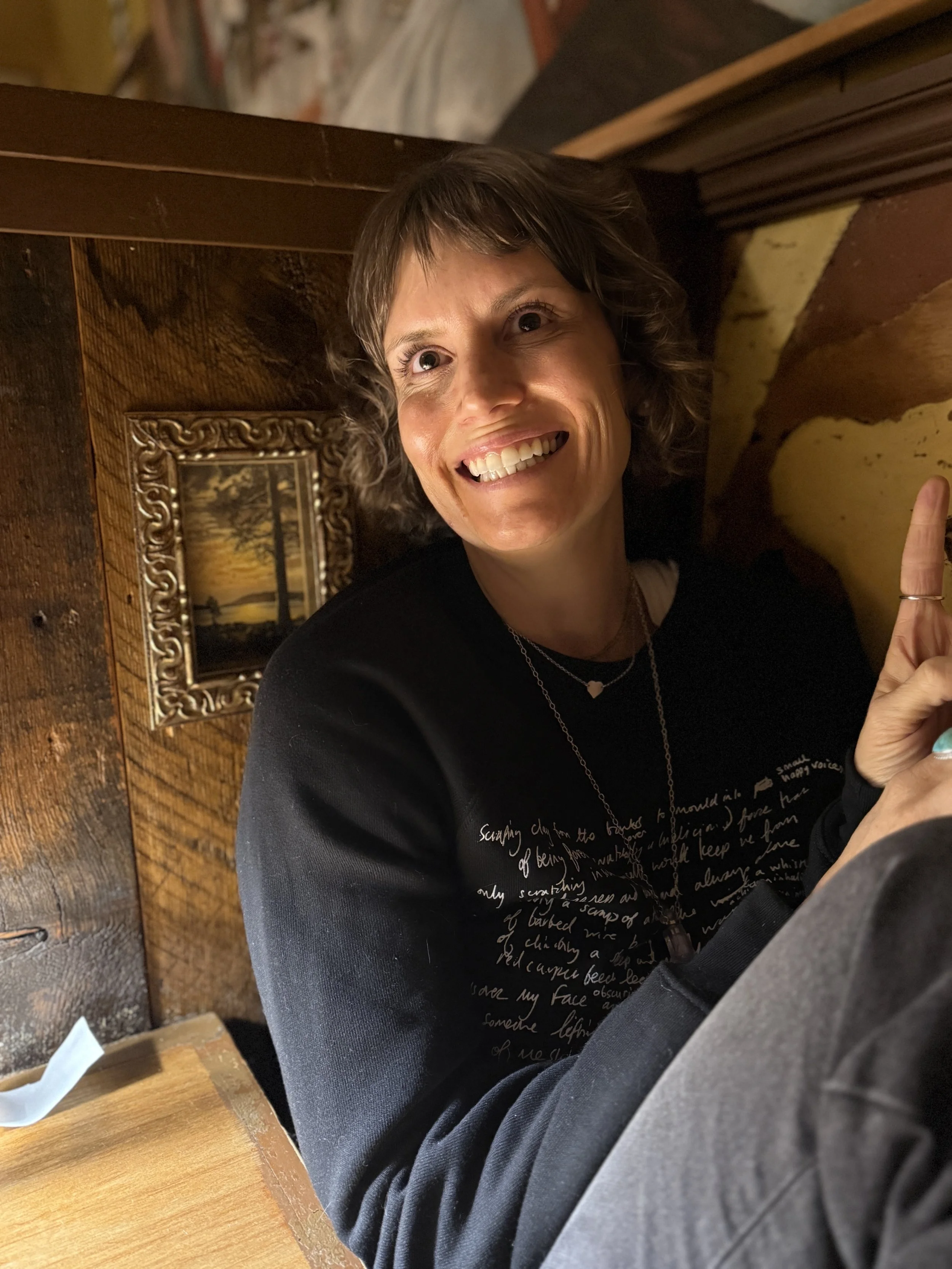
I'm a therapist, coffee lover, and someone who values small moments of presence-whether that's mindfulness, photography, or a quiet walk. Photography, especially, helps me stay grounded and curious-two qualities I bring into my work with clients.
I've been drawn to healing and spirituality since my teens and have explored many approaches, from meditation to energy-based practices. At the same time, I'm just as likely to be blasting music in the car or listening to a true crime podcast. To me, healing includes stillness, humor, movement, and joy.
I've worked in mental health settings since 2007, which shaped my belief that healing is never one-size-fits-all. It's personal, evolving, and always possible.
Training & Background
Inference-Based CBT (ICBT) for OCD - The OCD Training School & The Cognitive Behavioral Institute
Certified in Exposure and Response Prevention (ERP) - The Cognitive Behavioral Institute
Gottman Method Couples Therapy - Level 1
Master's in Social Work - Portland State University, 2012
